
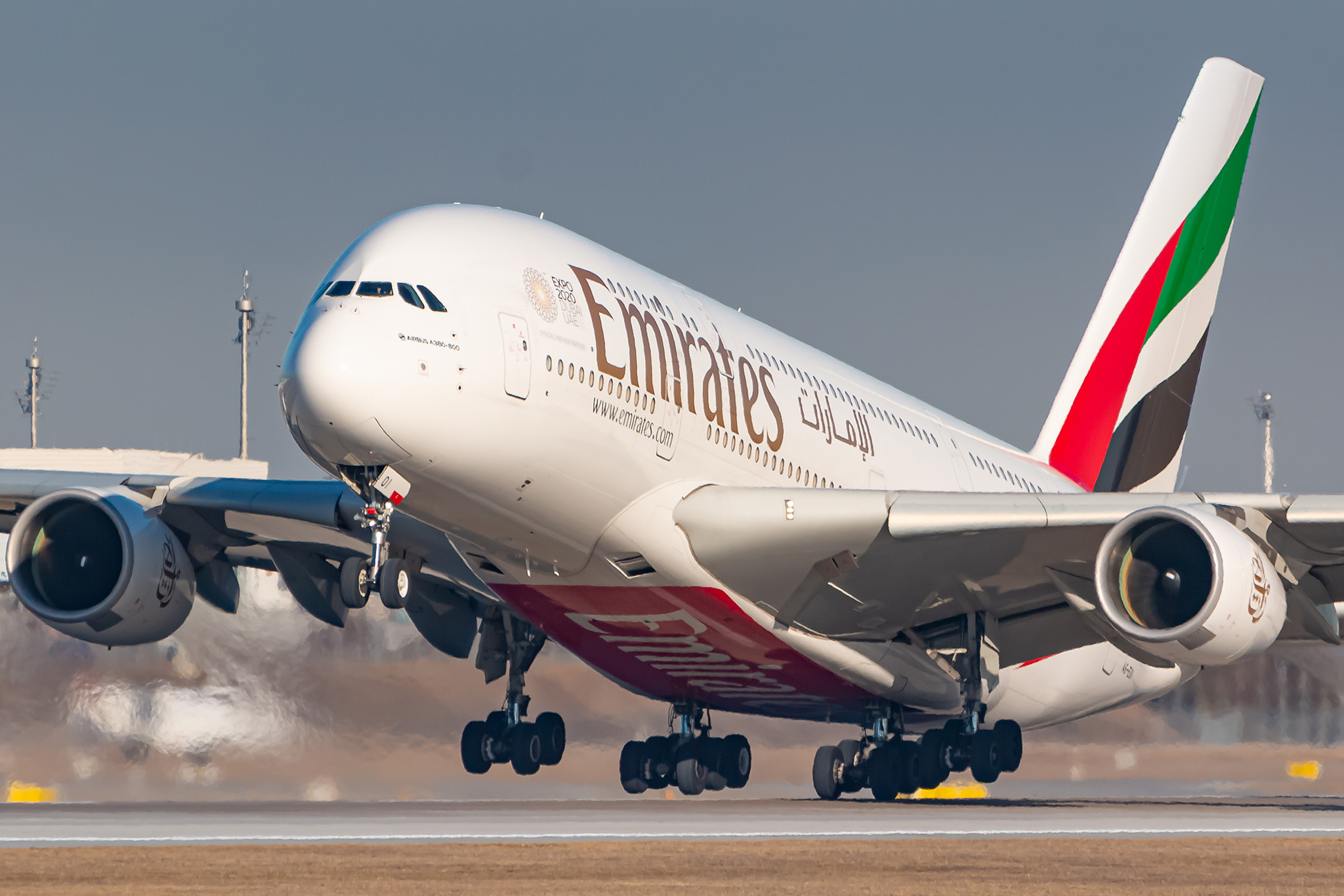
The largest passenger planes in the world continue to play an important role in commercial aviation. From the Airbus A380 to the Boeing 787-10, these aircraft connect millions of passengers every year while creating career opportunities for pilots, cabin crew, engineers, and other aviation professionals.
How Are the Largest Passenger Planes Ranked?
Airlines use different cabin layouts, so the number of installed seats varies.
This ranking uses maximum certified passenger capacity rather than the typical number of seats used by individual airlines.
10. Boeing 787-10
Maximum capacity: Around 440 passengers
Typical seating: 300-375 passengers
The Boeing 787-10 is the largest aircraft in the Dreamliner family. It is designed for busy long-haul and high-capacity regional routes.
Its growing use creates opportunities for Boeing 787 pilots, cabin crew, licensed engineers, mechanics, and technical instructors.
9. Airbus A350-900
Maximum capacity: 440 passengers
Typical seating: Around 330-350 passengers
The Airbus A350-900 is now one of the most important modern long-haul aircraft.
It is widely used by international airlines and supports careers in flight operations, cabin services, composite maintenance, engineering, and technical training.
8. Airbus A330-300
Maximum capacity: 440 passengers
Typical seating: 250-290 passengers
The A330-300 has been used by airlines around the world for more than three decades.
Its large global fleet continues to create demand for A330 pilots, B1 and B2 engineers, mechanics, maintenance planners, and cabin crew.
7. Airbus A340-300 and A340-600
Maximum capacity: Up to 440 passengers
Typical seating: Around 300-380 passengers
The four-engine Airbus A340 is becoming increasingly rare, but several airlines still operate the type.
Candidates with recent A340 experience may find specialist opportunities in flight operations, maintenance, training, and aircraft transition projects.
6. Airbus A330-900
Maximum capacity: Up to 465 passengers
Typical seating: Around 290-310 passengers
The Airbus A330-900, also known as the A330neo, is the newer and more efficient successor to the A330-300.
It offers opportunities for pilots, engineers, cabin crew, reliability specialists, and professionals supporting airline fleet transitions.
5. Airbus A350-1000
Maximum capacity: 480 passengers
Typical seating: Around 360-370 passengers
The A350-1000 is the largest passenger aircraft currently produced by Airbus.
Its increasing use on long-haul routes is creating demand for A350 flight crews, engineers, Trent XWB engine specialists, cabin crew, and technical instructors.
4. Boeing 777-300ER
Maximum capacity: Around 550 passengers
Typical seating: 350-425 passengers
The Boeing 777-300ER remains one of the most successful large widebody aircraft in commercial aviation.
Its large global fleet supports jobs for pilots, cabin crew, GE90 engine specialists, licensed engineers, dispatchers, and maintenance teams.
3. Boeing 747-8 Intercontinental
Maximum capacity: Around 605 passengers
Typical seating: Around 410-470 passengers
The Boeing 747-8 is the largest passenger version of the famous Queen of the Skies.
Only a small number of airlines operate the passenger model, but the aircraft still creates specialist opportunities for pilots, engineers, cabin crew, and cargo aviation professionals.
2. Boeing 747-400
Maximum capacity: Around 660 passengers
Typical seating: Around 416 passengers
The Boeing 747-400 helped transform international air travel.
Passenger operations are now limited, but the aircraft remains highly important in cargo aviation, supporting careers in flight operations, maintenance, freighter conversion, and technical support.
1. Airbus A380-800
Maximum capacity: 853 passengers
Typical seating: More than 500 passengers
The Airbus A380 remains the biggest passenger plane in the world.
Its full-length double-deck cabin allows airlines to carry large numbers of passengers on high-demand routes between major international airports.
A380 operations require large teams of pilots, cabin crew, engineers, mechanics, dispatchers, load controllers, ground handlers, and airport operations professionals.
Biggest Passenger Planes in 2026
| Rank | Aircraft | Maximum capacity |
|---|---|---|
| 1 | Airbus A380-800 | 853 |
| 2 | Boeing 747-400 | Around 660 |
| 3 | Boeing 747-8 | Around 605 |
| 4 | Boeing 777-300ER | Around 550 |
| 5 | Airbus A350-1000 | 480 |
| 6 | Airbus A330-900 | Up to 465 |
| 7 | Airbus A340-300/600 | Up to 440 |
| 8 | Airbus A330-300 | 440 |
| 9 | Airbus A350-900 | 440 |
| 10 | Boeing 787-10 | Around 440 |
What These Aircraft Mean for Aviation Careers
Large passenger aircraft create opportunities far beyond the cockpit.
Airlines operating widebody fleets need:
- Pilots
- Cabin crew
- Licensed engineers
- Aircraft mechanics
- Flight dispatchers
- Maintenance planners
- Technical instructors
- Ground operations teams
As airlines replace older four-engine aircraft with newer twin-engine models, experience on aircraft such as the Airbus A350, Boeing 787, Airbus A330neo, and Boeing 777 may become increasingly valuable.
Although airlines continue investing in newer twin-engine aircraft, the largest passenger planes remain some of the most impressive aircraft in commercial aviation and continue to support thousands of aviation careers worldwide.
Find Widebody Aviation Jobs
Interested in flying, maintaining, or supporting some of the biggest passenger planes in the world?
Explore the latest pilot, engineering, cabin crew, maintenance, and aviation operations vacancies on AviationCV.
Keep your AviationCV profile updated with your aircraft types, licences, ratings, recency, flight hours, and technical experience so recruiters can quickly understand where you fit.